Can you tell what’s strange about this mouse?
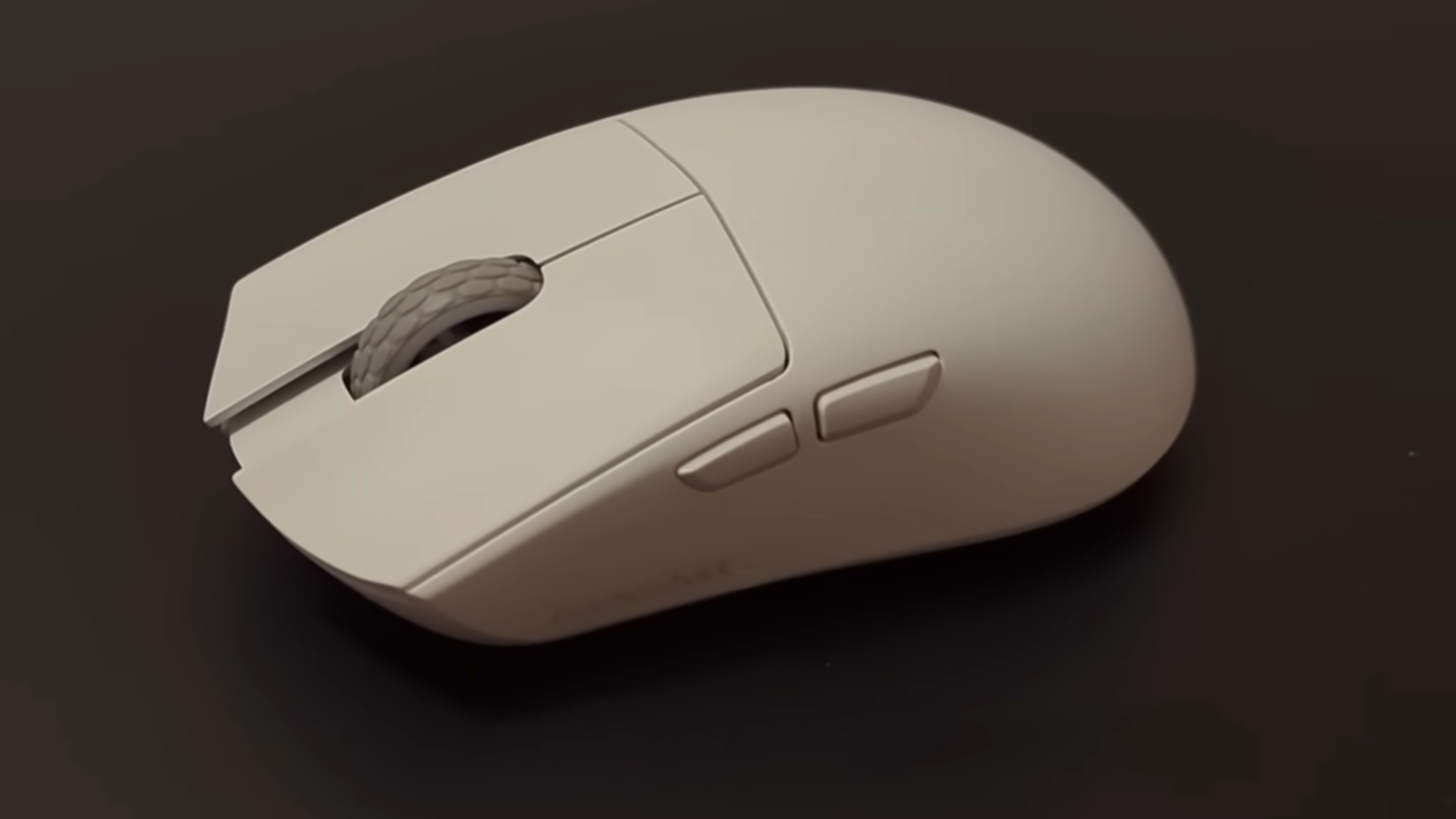
It all seems fairly standard right? it has an average number of buttons, it’s not vertical, it’s not steampunk, there’s no holes, it’s just a normal mouse.
Right?
But when I put a Logitech G Pro Superlight next to it, the answer becomes obvious.
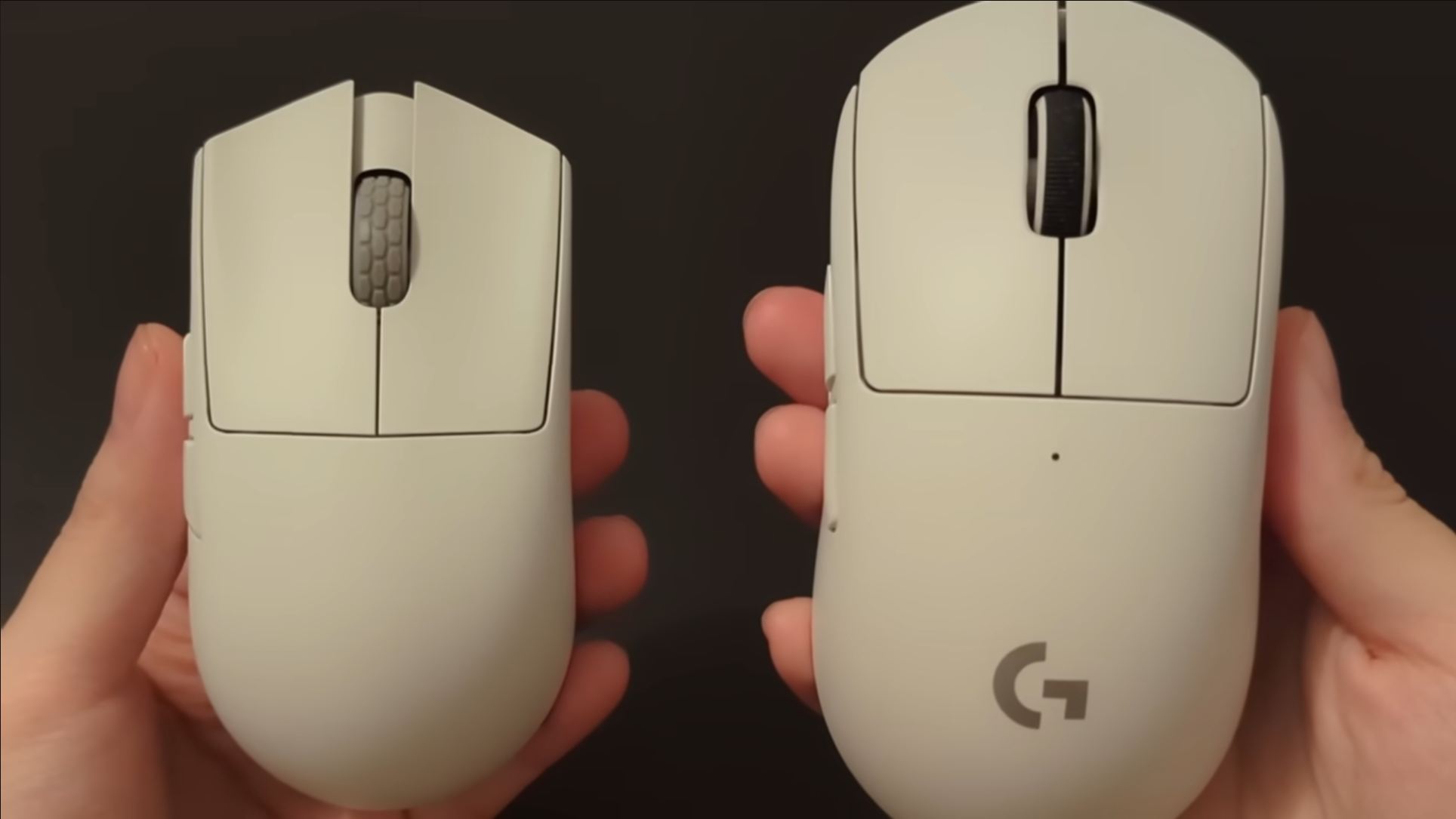
This thing is tiny.
That mouse is part of a growing niche of mice called fingertip mice. They don’t seem to make that much sense: why would you ever want a mouse that’s so much smaller than your hand?
But in order to understand that, we need to first understand the mouse grip these mice are designed for: the fingertip grip.
The Fingertip Grip.
The least popular, most unstable grip, where you only have your fingers touching the mouse and your palm doesn’t make contact at all.
But, if you asked the internet about which grip style is the best, they might tell you that fingertip grip is what’s “theoretically optimal.” Because you aren’t making palm contact you unlock a whole new ability: the freedom to move your mouse within your hand using your fingers.
If I were to aim using just my fingers in a claw grip, almost all of the vertical movements would come from my arm; my fingers are pretty much locked in place. But without palm contact, you can physically mouse vertically without moving your arm at all. It unlocks an extra dimension to your aim letting your fingers be more involved with every mouse movement you make: flicking, tracking, microadjustments, you name it.
But of course, “theoretically the best” means “in reality, there are drawbacks.” Not having your palm touch the mouse is a real nerf to stability and consistency, your fingers will get more fatigued, it’s harder to use your arm to aim, and your sensor can end up all over the place during flicks. But everything on that list is… trainable.
So it begs the question:
Could somebody with mastery of the grip get the benefits of the additional finger mobility without any of these drawbacks?
Before we talk about why you would want to use a tiny mouse, we have to talk about the grip they’re designed for first.
Why I became a fingertip grip user.
The first time I ever thought about this was in 2015, when I was a Counter-Strike player. I saw pros in that game as the peak of mouse aim, and I’d compare myself to them to see if what I’m doing is worse or even wrong. And when I looked at the grip styles of every active pro, only one of them used fingertip grip. It didn’t make sense to me: why would a grip that is theoretically the most flexible be used by only one player?
I couldn’t think of any reason why this would be the case other than that it just wasn’t viable, so to see what I was missing out on, I switched to claw grip and bought mice meant for it like the G Pro Wireless. For three years, I kept using this grip and these big mice, long after I quit CS.
The KovaaK’s project, the mouse accel arc, my whole streaming career: all of it was with claw grip.
And while there are some elements of aim that are objectively better suited for claw grip, like stability, it was difficult for me to determine what improvements to my aim came from the grip and what came from those 3 years of practice to have any definitive conclusions about which was better.
Until in 2020, when I hit a plateau with my aim for the first time.
My fine control just wasn’t getting better, leading me to things like flicking every shot on Sniper and Scout in TF2. So I tried everything: different sensitivities, mousepads, mice, and practice routines, and.. you’re probably expecting the punchline to be “it was claw grip the whole time,” but no. The more I changed, the more I realized that almost everything I was doing was not suited for the games I was playing.
Things I had copied from CS players like really low sensitivity and slow mousepads made a lot of sense for tac shooters when those games place so much emphasis on stability and precision. But for the type of aim I was doing now in TF2 and Apex, I could use something else that suited skills like verticality and easier directional changes more.
So for the first time, instead of thinking, “what are these players doing that makes them so good,” I thought, “what can I do to make what makes me good, more of a factor in my gameplay?”
And that’s when I had the idea to try my fingertip grip again.
Optimizing to my strengths
If you make your sensitivity extremely high and try to aim at something, you’ll probably notice that you naturally lean into your fingertips to create very fine and accurate motions. Our fingers are our best tool for precise motor skills, and the fingertip grip tries to capitalize on that trait by making them more involved.
It felt like with the mice I was using and the way I was gripping made me incapable of leaning into that skill. So the first step was using a setup suited to this style.
I got a Viper Mini, a much smaller mouse more suited to my hand size and started to use fingertip grip again. It gave me a taste of that finger mobility I was missing for so long, where it played a small but important role in my aim for fine motions. It was a great way to reintroduce me to the style, and my biggest weakness of fine control and microadjustments, started to become less and less of a standout issue. It even let me start to be able to control higher sensitivity, letting my aim become much more well rounded.
But that gave me a thought: if a smaller mouse let me make all of these improvements and lean into this grip so effectively, something even smaller than the Viper Mini should theoretically be even more ideal.
And that’s when the GWolves HSK was announced.
The Husky.
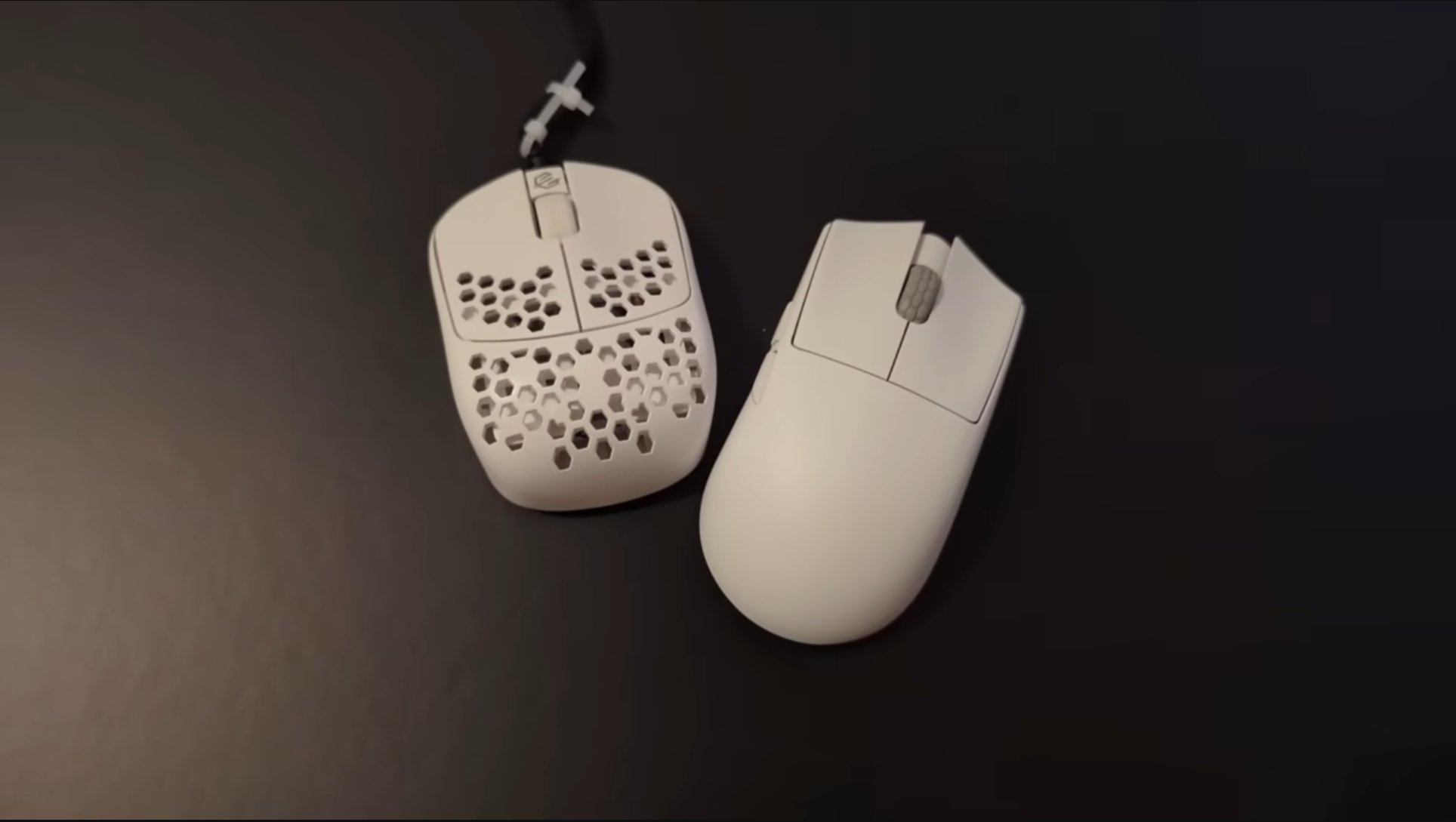
It looked like somebody took a normal mouse and sawed it in half. It defied all of the conventional dimensions that mice all seemed to fall into and did something that made it unique. A mouse that you could only use with fingertip grip.
In theory, this should do two things: the first is making that range of motion argument from earlier even stronger. With it being a bit thinner and a lot shorter than even that small mouse from the intro, our fingertip aim becomes even more versatile.
The second is weight. Since we don’t really need the back half of the mouse, cutting it off means that we can get to an extremely lightweight 38 grams, which for 2020 standards was at the very forefront of weight optimization. Both of these things together should make your fingers an extremely active part of your aim. It could be used for more than just microadjustments, maybe not big flicks but they can be much more involved with every motion you make more intuitively thanks to these features.
So I got one. My first impressions were that it felt like it traded off too much stability and the missing weight at the back of the mouse was kinda strange.
But every time I would come back to the HSK and dip my toes back into true fingertip mice, I found that I was playing better and better.
I was improving with the fingertip grip style generally and the more I used it, the more I appreciated how easy it was to manipulate the HSK within my hand. Long range tracking could be performed almost entirely with my fingers, and I was getting better at blending these motions with my other muscle groups. At some point, it felt like I couldn’t even go back to the viper mini, because I was just playing so much better with this weird half-mouse.
But then GWolves took it one step further.
The HSK Pro.
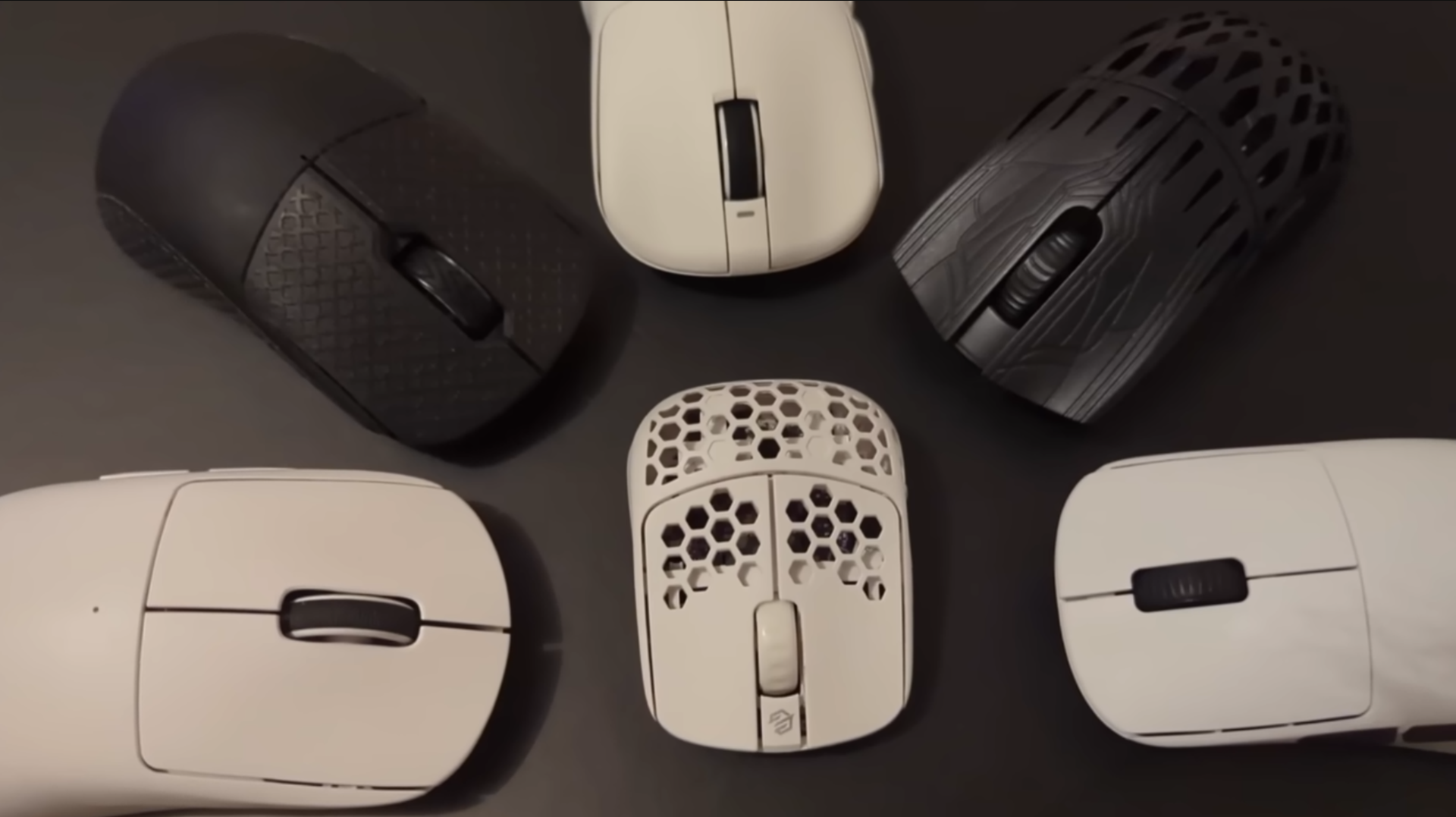
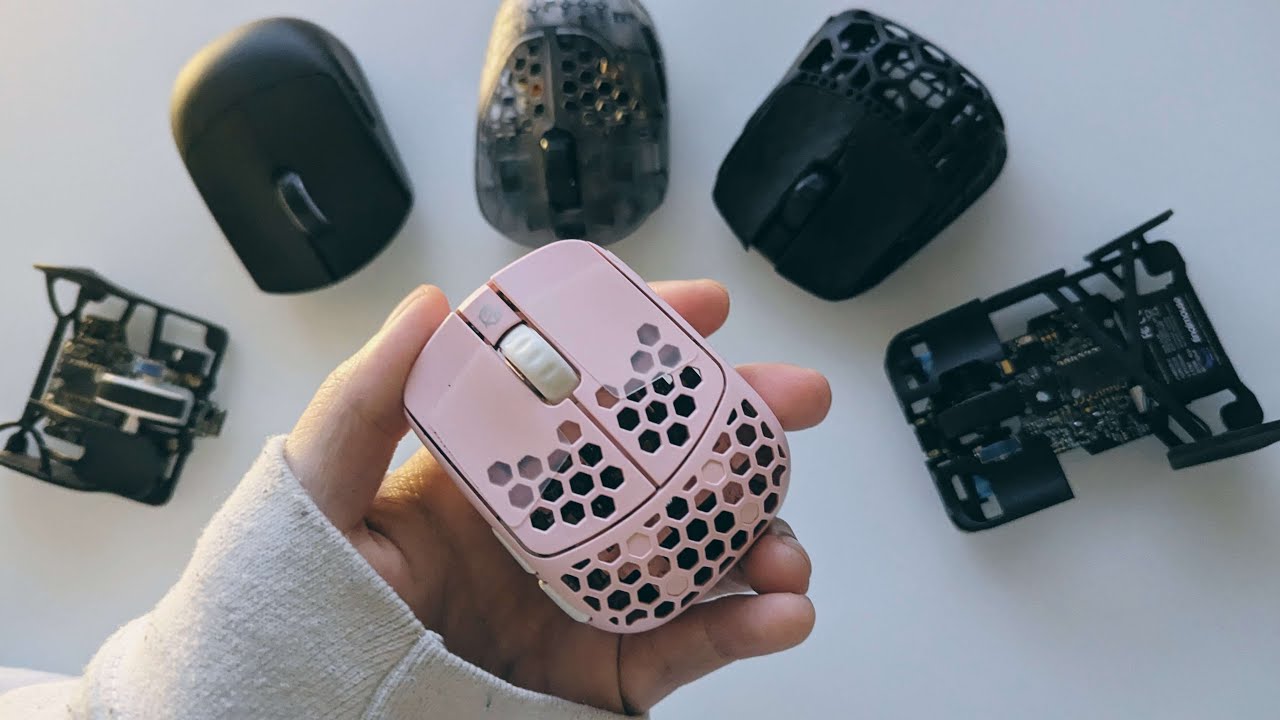
The HSK Pro. 26 grams and significantly smaller than the last HSK. This mouse was even more out there in terms of innovation.
It wasn’t just taking a normal mouse and cutting it in half anymore, this tiny aiming device was so small that it was unlike the aiming experience of any other mouse. It should take the ideas of what made me like the original HSK, range of motion and weight, and take it to its logical extreme.
But this mouse had me asking questions I had never asked before.
Is there such a thing as a mouse that’s too light? or too small?
Even for my relatively small hands this thing was so unwieldy and unstable that it naturally led me to applying a lot of extra force just to keep it in my hands. It was actually painful to use this mouse for any extended period of time. So it seemed like, while a nice idea, it also reveals the limitations of how far you can push fingertip mice in terms of specs.
Finding the limit.
And this set me on a quest. If this was too far, what actually is the limit? Surely it’s something between these.
So I tried some other options in the market, tried some 3d printed shapes, cut some mice in half, tried some mice that could’ve bought me a new guitar, tried some more 3d printed mice, and at the end of all this… I still went back to the original HSK.
It was just a safe shape that did what it tries to do very well.
At this point, I felt like I was ready to give my final thoughts on the fingertip market as it stood. I had thought about dipping my toes into mouse reviews and with my obsession with this niche, I thought I could give a pretty neat summary of everything that’s out there right now.
“So yeah, the HSK is probably the mouse that I’d recommend for anybody wanting to dip their toes into this niche. It’s relatively cheap, it’s much safer than most other options, and I still perform the best with this thing.
But then we have the HSK Pro, which is kinda like the black sheep of this lineup here. I feel like this mouse is more like using a pen than it is a mouse, it places so much emphasis on the fingertips that it becomes difficult to actually use anything else.
On paper, it should be the best mouse for somebody. I feel like this style has potential; it’s an insane level of optimization in terms of weight and gives your fingers so much freedom of movement to articulate it in that penlike style, but it’s so different to everything else that you’d have to commit a lot of time to learn this new style just to get value of it.
And for me that’s not really worth it.”
I sat there after that review and thought about what I had just said. I really believed that this mouse had potential and there was somebody out there who would put in the time and take it to its limit. But it would take so much effort and dedicated practice to negate all of the downsides this mouse places on you. If I wanted to see how far fingertip mice can be pushed, it wasn’t a certainty that I’d get an answer because it’s just so out there, and it’s not a guarantee somebody really dedicated will stick with it.
So to finally try and answer that question I had in 2015, I committed to it. I spent an entire year and over 1000 hours of gameplay exclusively using the HSK Pro.
Was it worth it?
It turns out that pain I was initially feeling was something that would go away once I became comfortable with it. That instability that I thought was innate to weight would also start to subside after many hours of practice with learning to control it. The shape that I initially thought contributed to the feeling of the mouse slipping out of your hand, might be something that contributed to that precise, penlike feeling.
And now there’s not another mouse on the planet that I prefer to use or aim better with.
Now, I am nowhere near the best FPS aimers of all time. But… when you look at my raw aim just 2 years ago it wasn’t horrible, but compare it to now. It’s a big difference.
So, is fingertip grip actually the best?
But that still leaves the question: is fingertip grip objectively the best mouse grip? Now that I’ve developed this much stability and consistency, are there only upsides?
no LMAO
Like most things that are “theoretically optimal”, when you take into consideration human limits, there will always be pros and cons. Those tradeoffs I mentioned in the intro are still very real, and fingertip mice are definitely not for everybody.
Even if you do use the grip, it’s the kind of thing that does maximize the pros of it while also amplifying the cons.
But I really do feel like it suits my style well. While I do believe that I could have ironed out my weaknesses in claw grip through a lot of practice, I feel like between the grip and my weird mouse preferences, I managed to lean into one of my strengths as much as I could and then built up supporting skills around it.
If you get anything out of this video, it should be that.
Trying out things from successful players or just experts in whatever skill that you’re trying to learn, is never a bad thing.
But it’s so useful to understand why people do what they do, not just blindly mimic them.
In my case, I had to learn that the goals of tac fps players were different to my goals and that pros are not necessarily the arbiters of fps mechanics. But I might’ve never stopped blindly following their lead if I never thought about the “why” behind their preferences. Even within the tacfps space, there are exceptions to that rule.
Everybody is good at different things and everybody’s optimal method of improvement will be slightly different, it doesn’t make sense to just follow what other people are doing without thinking about it.
So, figure out what makes the most sense for you. Sometimes that will be learning from others and trying to master their technique, other times it will be combining ideas from different players and skillsets, and occasionally, your best bet is to just do what feels right to you, even if you’re the only one doing it.
Thanks for reading.